STEM Careers That Start With GCSE: Why Your Child's Subject Choices Matter

TL;DR: Most STEM careers are not decided at university. They are decided quietly, years earlier, by the subjects a student takes at GCSE and the grades they achieve in them. Medicine, engineering, computer science and the top apprenticeships all trace back through A-level requirements to GCSE Maths and Science. This guide maps the routes: which GCSE choices keep which doors open, what sixth forms and Russell Group universities actually look for, and what parents of Year 8 and Year 9 students can do now so that no option closes before their child has had the chance to want it.

Key Takeaways
GCSE grades matter more than GCSE subject count. Strong grades in Maths and Science keep almost every STEM route open.
Most sixth forms set grade thresholds for A-level entry, often a grade 7 in a subject to study it at A-level. The GCSE grade is the gatekeeper.
Triple Science is the natural route for students set on science A-levels, but Combined Science with high grades keeps STEM doors open too.
Medicine, engineering and computer science each trace back to specific A-levels, which trace back to specific GCSE foundations.
Year 8 and Year 9 are when this is easiest to influence. Securing the foundations now costs far less effort than repairing them in Year 11.
Ask a Year 9 student what they want to do at 25 and most will shrug. That is entirely normal. The problem is that some of the doors to what they might eventually want are already swinging on their GCSE choices.
A student cannot usually take A-level Physics without a strong grade in GCSE Physics or Combined Science. They cannot apply for medicine without strong science A-levels. And they will find engineering degrees closed without A-level Maths. Each step depends on the one before it, and the chain starts at GCSE.
None of this means a thirteen-year-old needs a career plan. It means the opposite. The job of a parent at this stage is not to pick a destination. It is to keep the routes open until the child is old enough to choose one.
Here is how the routes actually work, and what keeps them open.
Why GCSE Choices Carry More Weight Than Most Parents Expect
Parents often treat GCSE options as low stakes, on the logic that universities only look at A-levels. The logic misses a step.
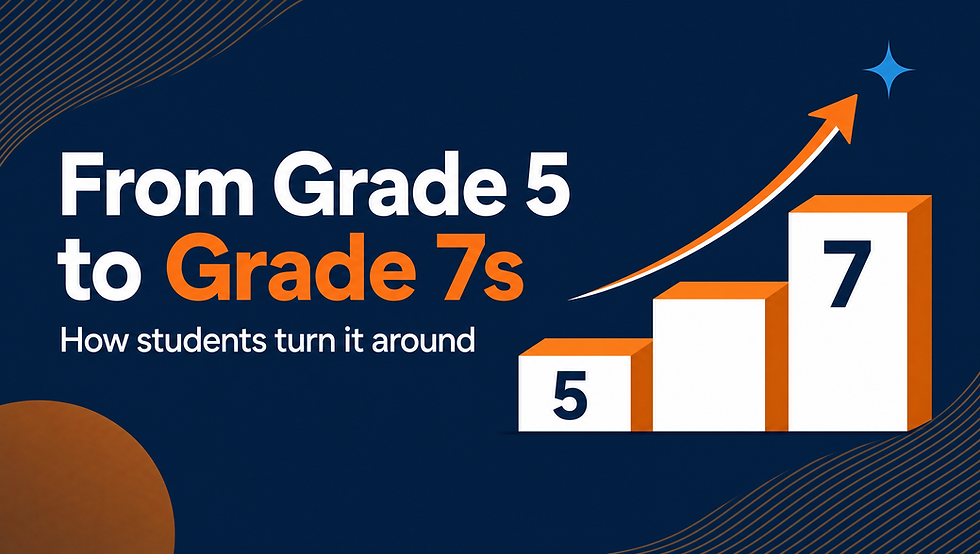
Sixth forms decide who gets to take which A-levels, and they decide it on GCSE grades. Most set entry thresholds, and for the sciences and Maths these are usually the highest: commonly a grade 7 to take a subject at A-level, and selective sixth forms often ask for more. A student with a grade 5 in GCSE Maths will find A-level Maths closed to them at many schools, however keen they are.
The GCSE grade is not a school report. It is an entry ticket.
This is the mechanism most parents discover too late, usually at a sixth-form open evening in Year 11 when the thresholds are printed on the prospectus and the mock results are already in. By then the options are whatever the grades allow. Two years earlier, the options were whatever the student wanted.
The Routes: From Career Back to GCSE
The clearest way to see why subject choices matter is to run the chain backwards, from the career to the classroom.
Medicine and dentistry require Chemistry at A-level, almost always alongside Biology or Maths. That means high science grades at GCSE, and medical schools routinely look at GCSE results themselves, including Maths and English.
Engineering requires A-level Maths at virtually every university, with Physics required or strongly preferred for most branches. That means strong GCSE Maths and Physics, whether through Triple or Combined Science.
Computer science requires A-level Maths at most Russell Group universities, with Further Maths an advantage at the most competitive courses. The GCSE foundation is Maths, taken as high as the student can push it.
Degree apprenticeships in engineering and technology, now among the most competitive routes in the country, ask for the same A-levels and therefore the same GCSEs as the degree courses they run alongside.
Notice what every route has in common. Whatever the destination, the chain runs through GCSE Maths and Science. A student who leaves Year 11 with strong grades in those subjects has kept effectively every STEM door open, including the ones they have not thought of yet.
Triple or Combined? The Question Parents Ask Most
Where schools offer a choice, Triple Science is the natural route for students already leaning towards science A-levels. It covers more content in Physics, Chemistry and Biology, and it makes the step up to A-level noticeably smoother.
But the more important point is the one that reassures rather than alarms. Combined Science with high grades keeps the STEM routes open too. Sixth forms accept strong Combined Science students onto science A-levels, and a grade 8-8 in Combined Science opens more doors than a set of 5s in Triple.
The deciding factor, again, is the grade rather than the badge. A student should take Triple if they can do it well. They should not take it as a status symbol if it means spreading themselves thin, and they should never be told that Combined Science has closed the door on science. It has not.
What This Looks Like in Practice: A Year 9 Example
Advice like "keep the doors open" only means something with a concrete case, so here is one we see often.
A Year 9 student enjoys design and is vaguely drawn to engineering, but sits at a grade 5-6 in Maths. Nothing is wrong on paper. School is not concerned. But run the chain forwards: engineering needs A-level Maths, A-level Maths needs roughly a grade 7 at GCSE, and the student is currently short of it with two years to go.
Handled in Year 9, this is a modest project. One focused year of closing algebra gaps and building fluency moves a 5-6 to a 7 without drama, because the workload is spread across terms rather than crammed before the exam. The same repair attempted in the autumn of Year 11, alongside mocks and every other subject, is a very different experience.
Proactive support is always easier than reactive intervention. That is the whole argument for acting in Year 8 and Year 9, and it is why we consistently describe those years as the ideal starting point.
Does your child know which doors their current grades are holding open?
Our free assessment shows you exactly where they stand in Maths and Science, and what it would take to keep every STEM route available.
What Sixth Forms and Universities Actually Look At
It helps to know what sits on the other side of the chain, because it is more demanding than many parents expect.
Selective sixth forms publish entry requirements by subject, and the pattern is consistent: the quantitative subjects carry the highest thresholds. Russell Group universities then look at A-level grades first, but competitive STEM courses look further back. Medicine and some engineering and computer science courses screen GCSE results as part of the application, because GCSEs are the only completed public exams a student has when they apply.
For families with Russell Group ambitions, the practical reading is simple. GCSEs are not a warm-up. They are the first set of results a university will ever see.
Our own students' destinations reflect where these chains lead when the early links are secure: predominantly Russell Group and STEM courses, at universities including Imperial, UCL, Warwick and Bristol. Behind each of those offers sits the same quiet sequence: solid GCSE foundations, the right A-levels, and grades strong enough to choose rather than settle. 95% of our students improve by at least one grade within their first term, and it is in Years 8 and 9 that a single grade of improvement buys the most future opportunity.
What Parents of Year 8 and Year 9 Students Can Do Now
The good news is that at this stage, small moves compound. Nothing on this list requires pressure, and none of it requires a career decision.
Find out where the grades actually are. School reports smooth over gaps. A proper diagnosis of Maths and Science identifies precisely which topics are costing marks and which foundations need reinforcing.
Prioritise Maths. It is the one subject that sits inside every STEM chain. A strong Maths grade is the single most door-opening result on a GCSE certificate.
Take the Triple Science decision on evidence, not status. If the grades support it, take it. If not, aim for the highest possible Combined grades instead.
Check the local sixth-form thresholds early. They are published. Knowing in Year 9 that the preferred sixth form wants a 7 for A-level Physics turns a vague worry into a concrete target.
Treat confidence as part of the plan. A student who believes they are "just not a maths person" will not choose STEM options, whatever their ability. Rebuilding that belief early changes which doors the student walks through, not just which ones are open.
Final Thoughts
Your child does not need to choose a career. They need grades good enough that the choice stays theirs.
That is the real case for taking GCSE subject choices and foundations seriously in Year 8 and Year 9. Not pressure, and not a fixed plan for a thirteen-year-old, but the quiet work of keeping every route open until the ambition arrives to use one.
The students who walk into sixth form with options are rarely the ones who worked hardest in the last four weeks. They are the ones whose foundations were secured years earlier, before anything was urgent.
Want to know exactly where your child stands?
Book a free assessment and we will map their current grades against the STEM routes, and show you what a sensible plan looks like.
About the Author
A-Star Tuitions Team
The team at A-Star Tuitions specialises in GCSE Maths and Science tuition for students in England. We share practical, evergreen insights to help our readers succeed.